Load tests for High-Speed Rail Infrastructure Works

Autovictor's Specialist Engineering Supporting Critical Infrastructure
In a sector where precision is essential and safety allows no compromise, Autovictor stands out as a leading technical partner for static and dynamic load testing on all types of structures, including those associated with high-speed railway infrastructure. We operate throughout Italy and internationally.
Load testing is carried out to verify the structural and functional capacity of structures or components such as bridges, precast beams, railway decks, steel structures, and industrial foundations. Tests may be static or dynamic and must safely replicate operating or overload conditions. Autovictor performs load tests in compliance with current technical standards and regulations (e.g., NTC 2018, Eurocodes), employing a range of methodologies:
Load Testing with Ballast Weights (Concentrated or Distributed Loads)
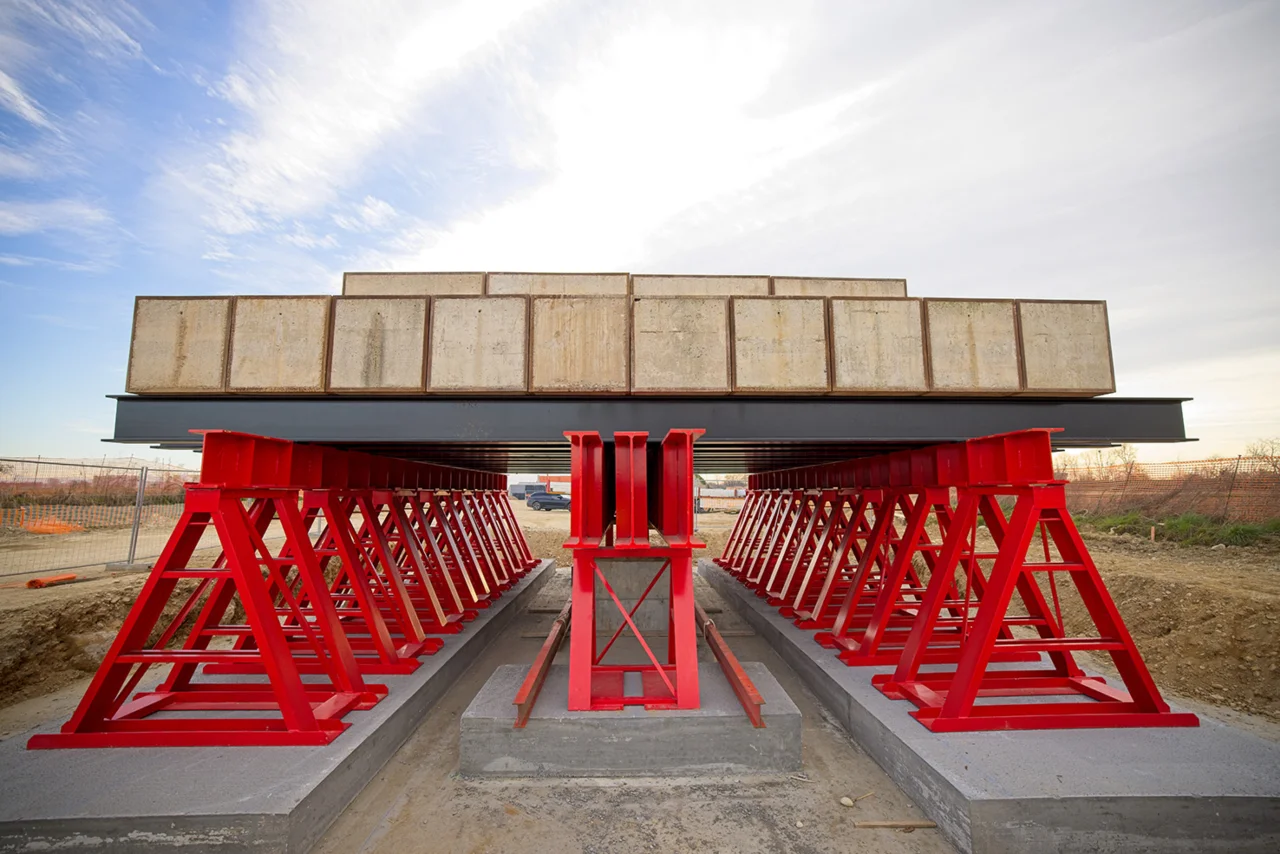
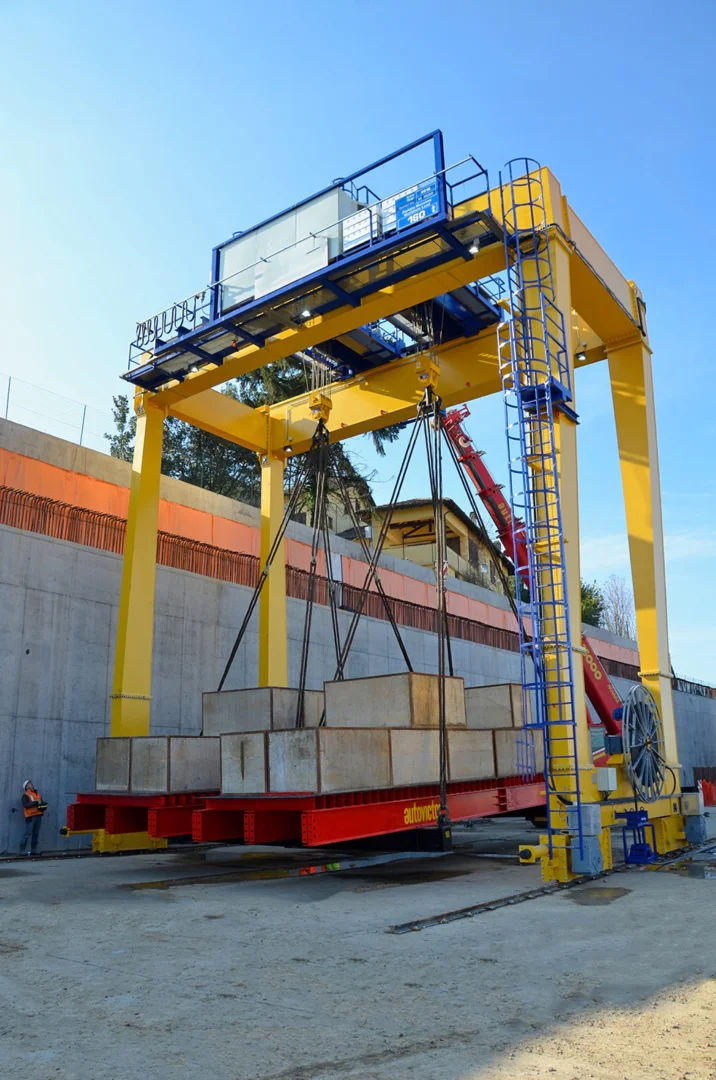
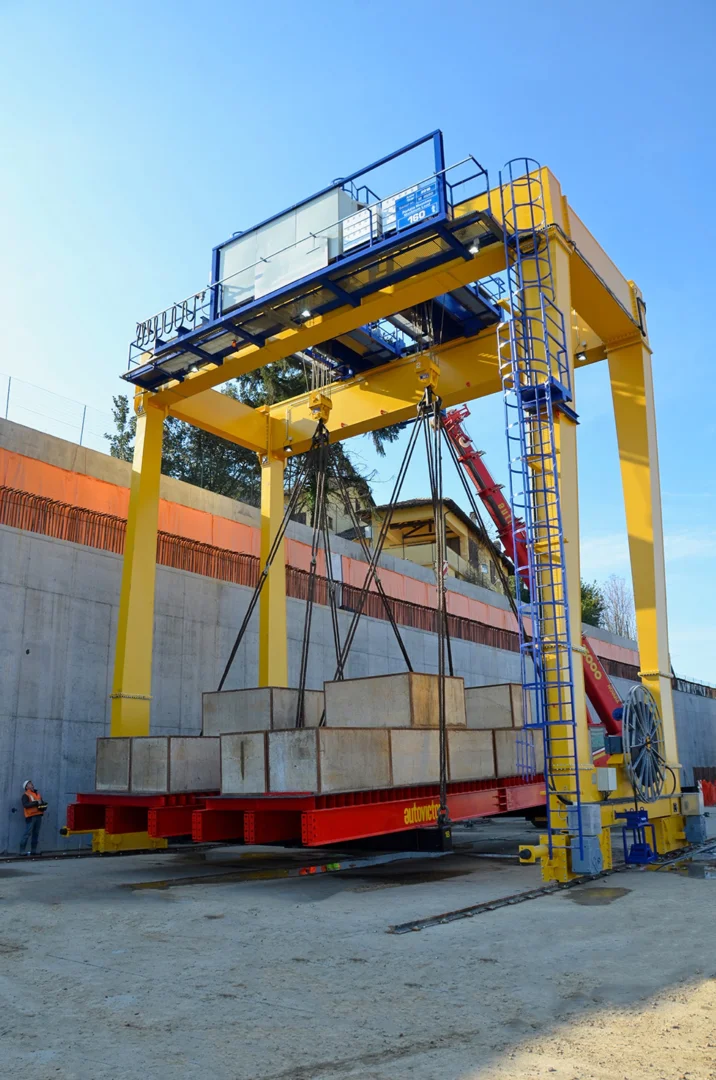
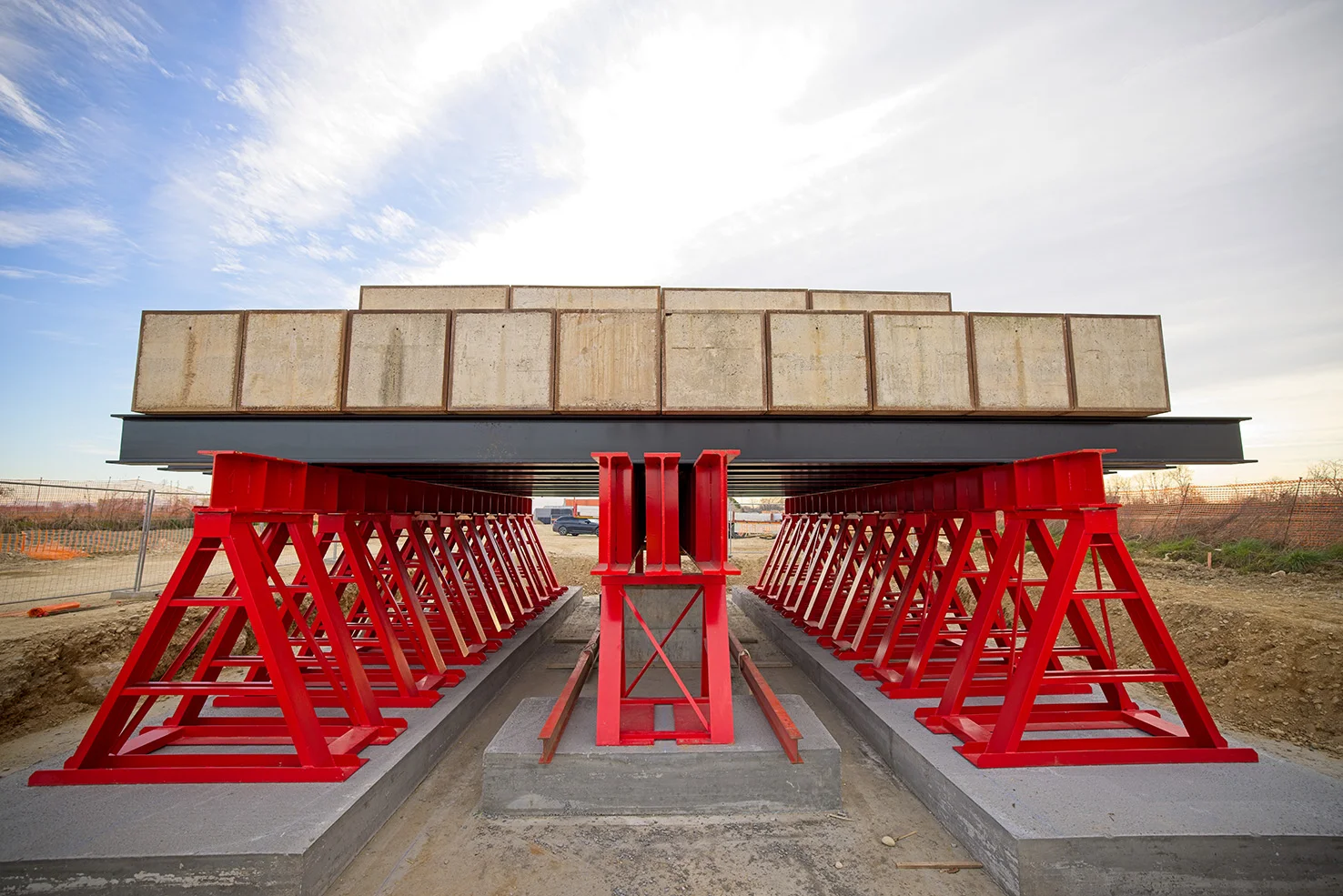
Autovictor utilizes modular concrete ballast blocks strategically positioned to test precast decks, beams, roofing systems, and pedestrian walkways, simulating design loads on logistics and industrial structures.
Reaction Load Testing
This method involves applying loads against a temporary reaction structure consisting of beams, foundation blocks, anchoring systems, or counterweights. Using this approach, Autovictor verifies foundations, bridge decks where direct loading is not feasible, and the stressing of structural elements. The main advantages are maximum flexibility in load application points and the possibility of performing tests even in confined spaces or on suspended structures, with full control ensured through advanced electronic instrumentation.
Load Testing Using Hydraulic Jacks (Compression or Tension)
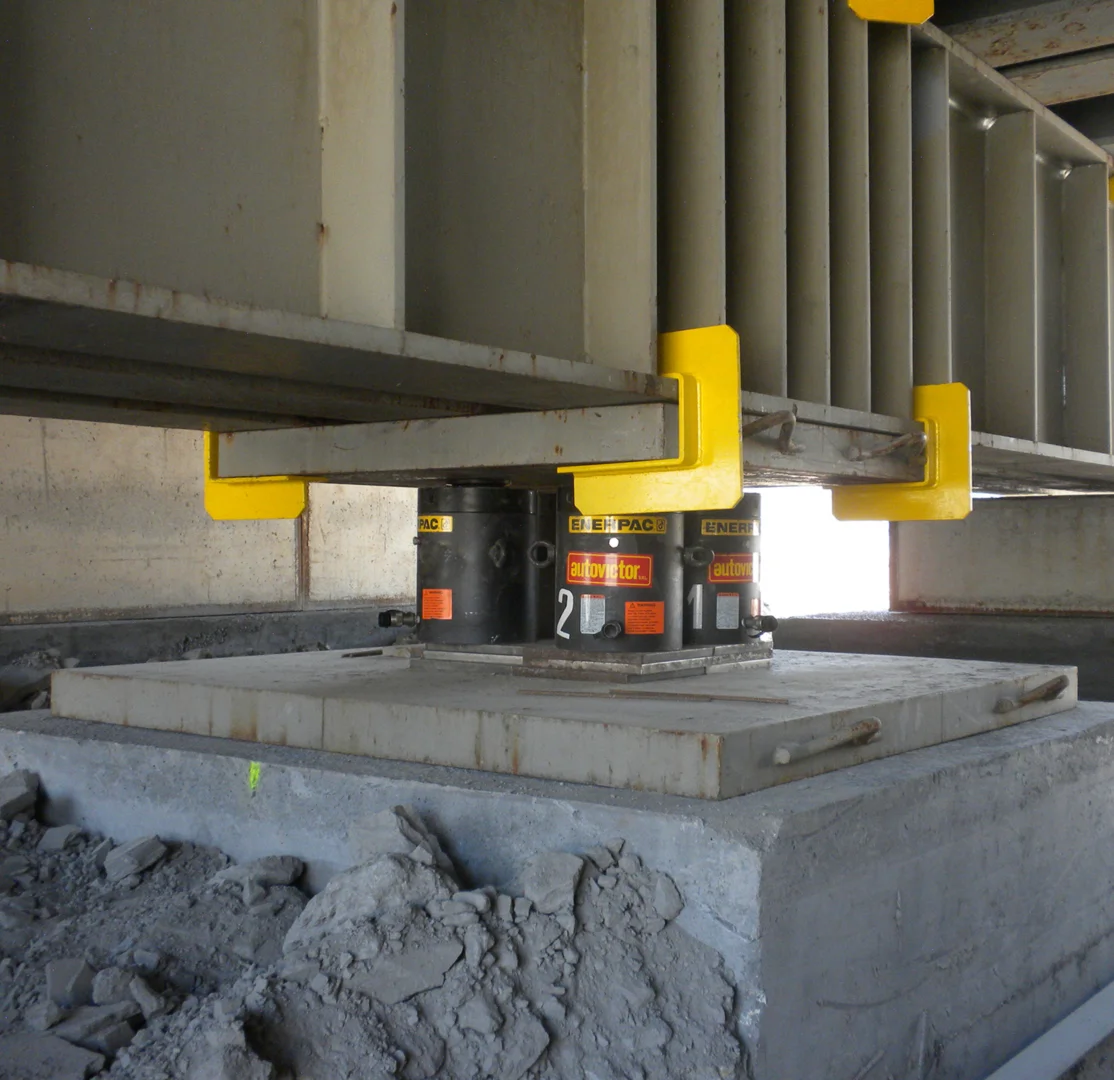
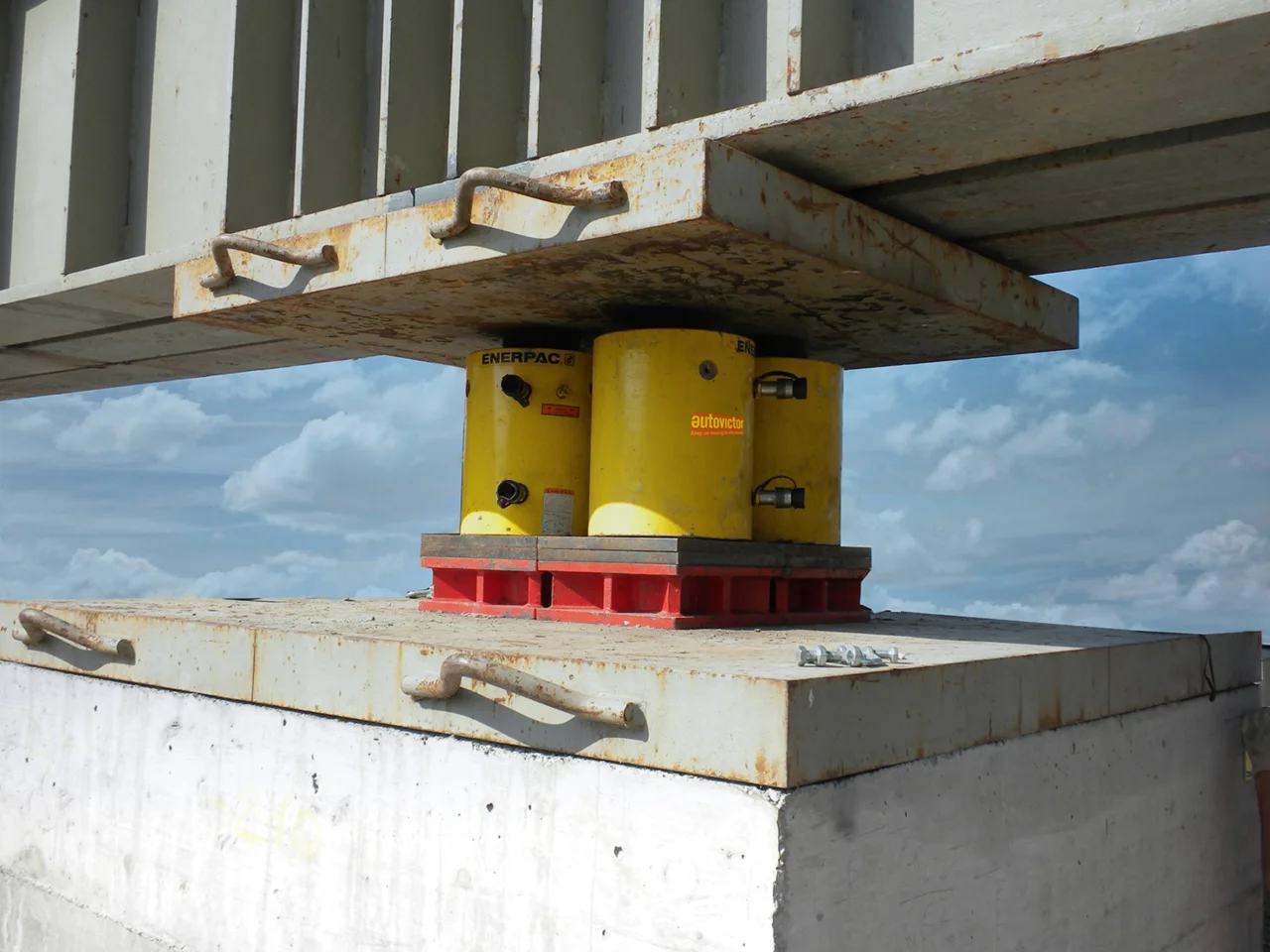
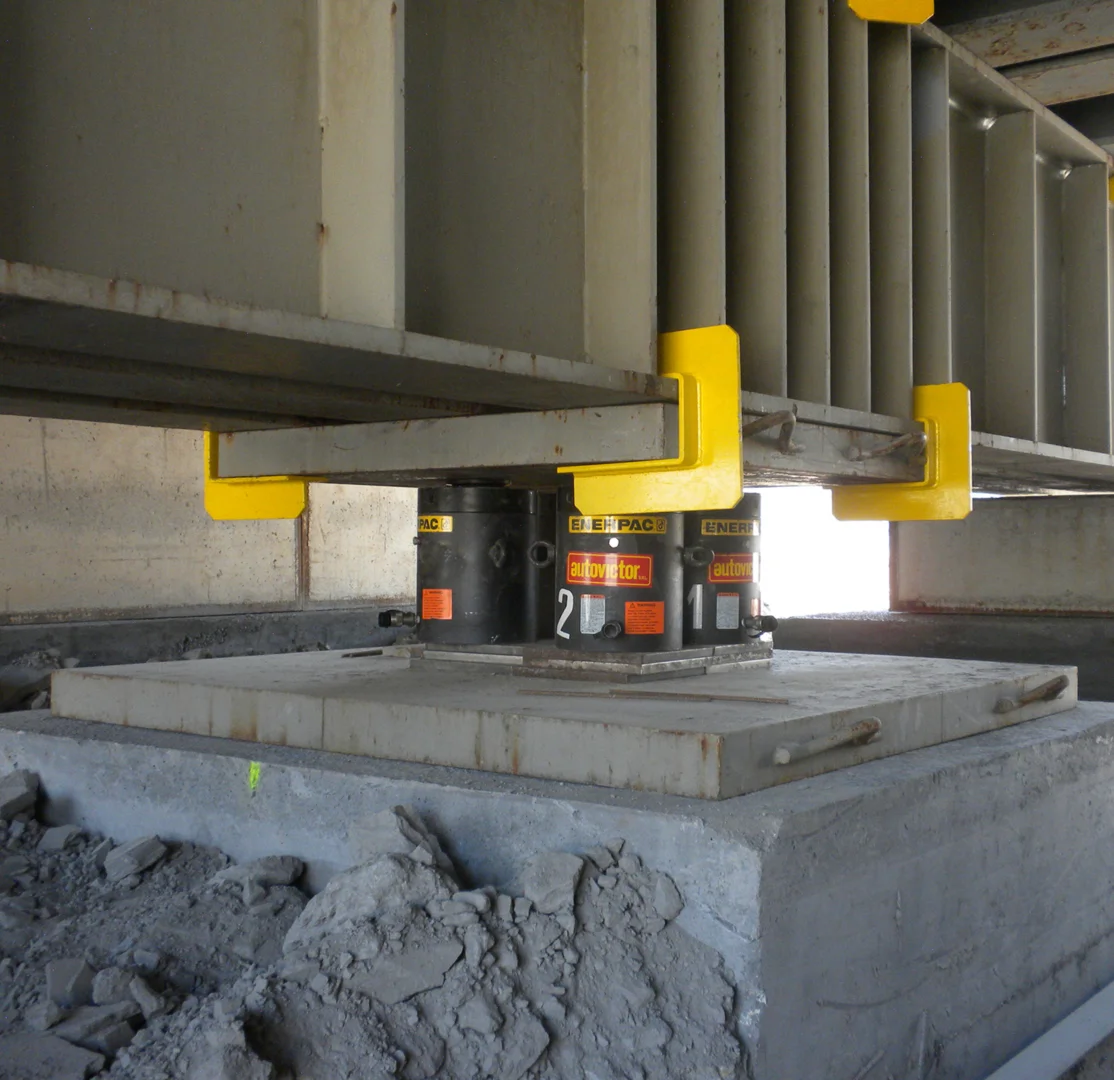
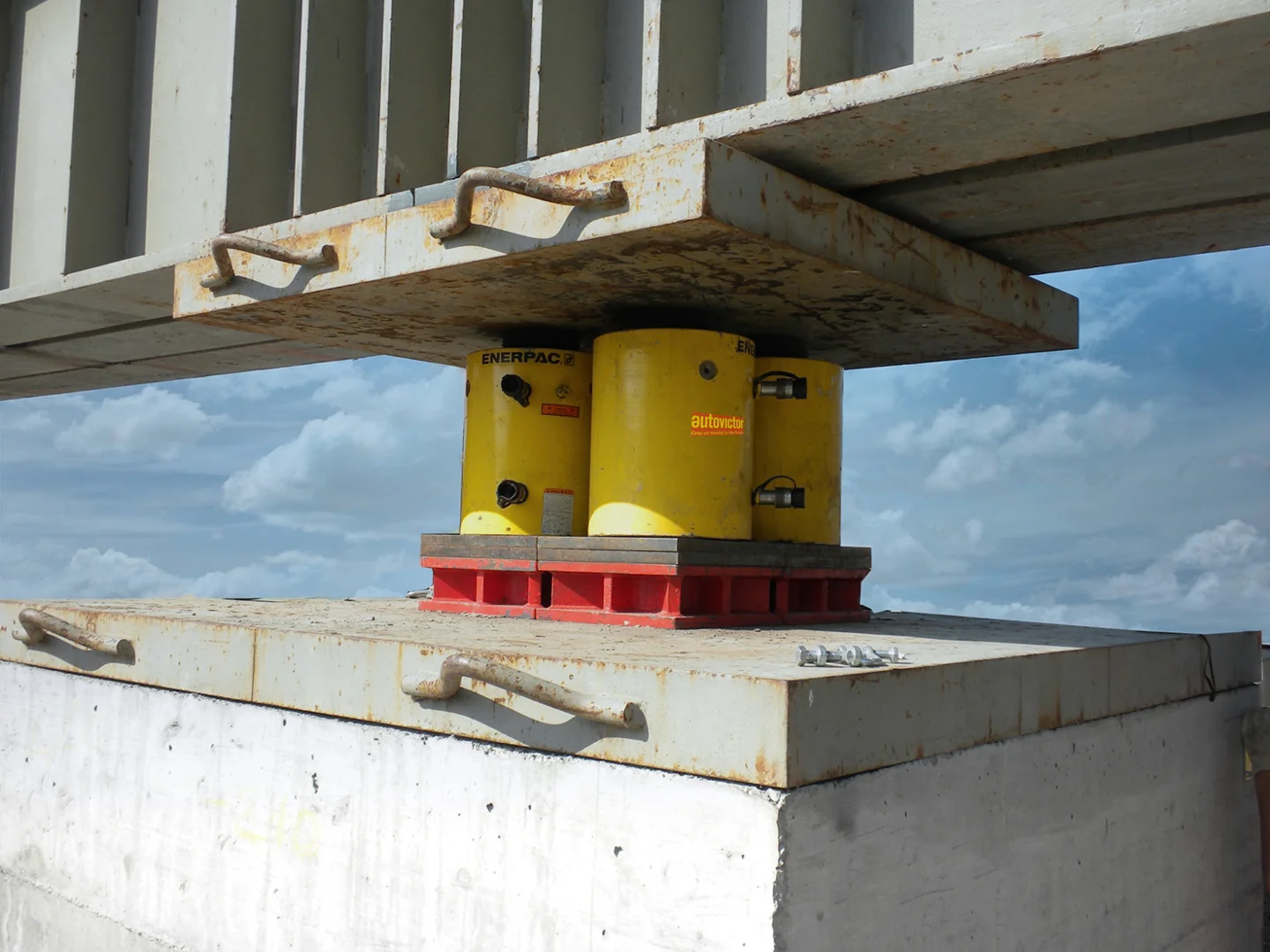
Autovictor hydraulic jacks apply precisely controlled loads to structures through either compression (push) or tension (lift) forces, using dedicated reaction frames. Typical applications include load testing of bridge decks, structural precast elements, and foundation piles (pull-out and push-in tests). The key advantage of Autovictor hydraulic systems lies in the extremely accurate control of the applied load, enabling progressive loading curves and real-time monitoring through load cells and sensors, supported by the extensive expertise of Autovictor personnel in designing and installing the entire testing system.
Dynamic Load Testing Using SPMTs
This methodology involves the use of loaded or ballasted Autovictor SPMTs moving in a controlled manner across the structure under examination in order to simulate dynamic transit loads. Typical applications include bridges, viaducts, and railway decks, using modular concrete ballast and steel beams to reproduce mobile loading conditions. This solution accurately simulates real operating conditions by distributing loads across multiple points through independently steered axle lines. Thanks to their self-levelling capabilities, SPMTs are particularly suitable for structures with uneven or irregular surfaces.